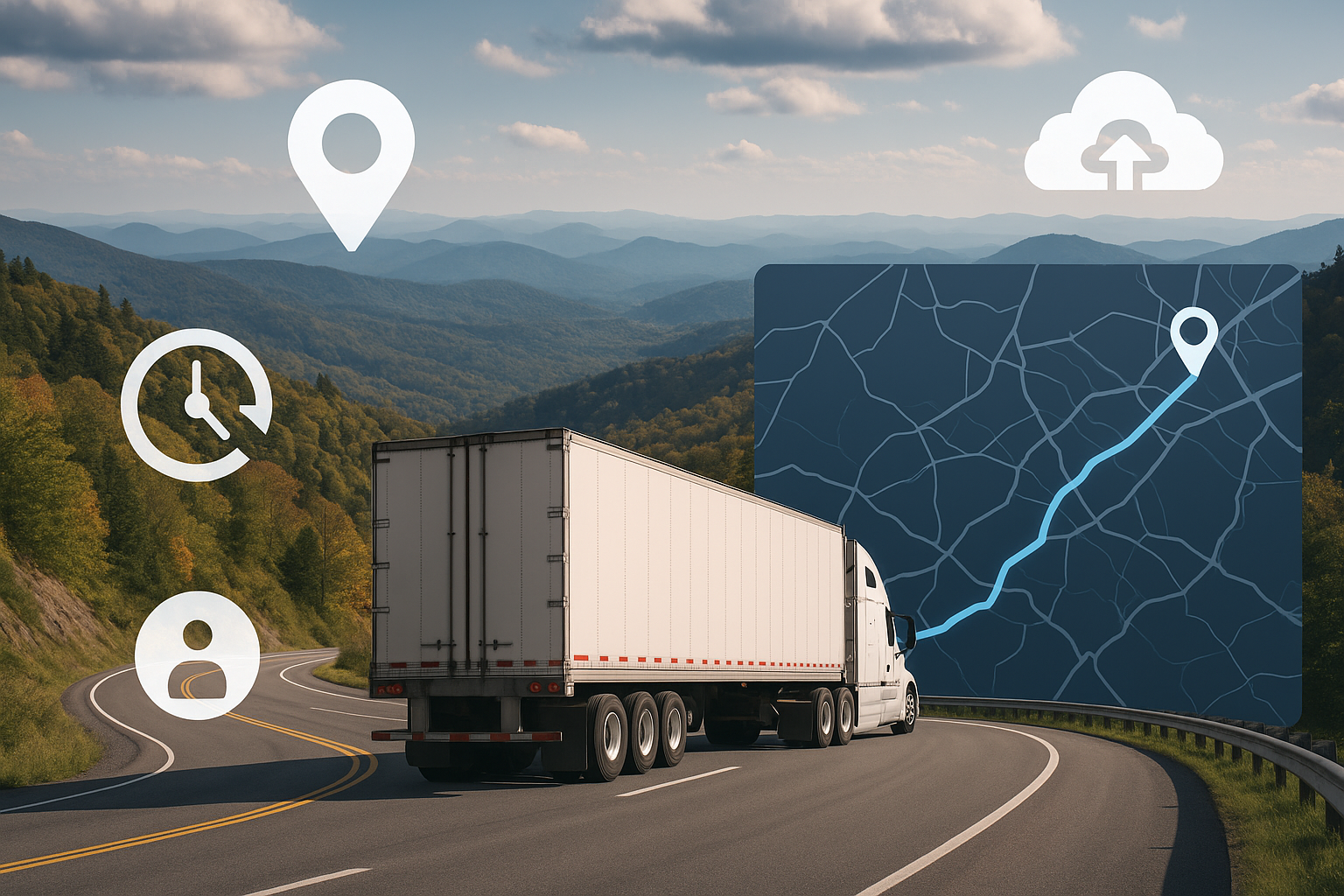
The logistics system in the Appalachian region is marked with its share of peculiarities. The curves of mountain roads, the unpredictable weather, and the scattered industrial centers together make the dry van operations a lot trickier than those found in the more straight, city roads. In view of this, Appalachian dry van tracking systems have become irreplaceable. Having access to real-time data and analytics, carriers can easily view the location of their assets, the status of the drivers and the conditions of the cargo — shifting uncertainties into workflows of insights. This article examines how the tracking tools for efficiency increase have been transforming the logistics of the regional corridor from Tennessee, the Appalachian gateway, to West Virginia and Pennsylvania. In addition, we will emphasize some of the main strategies, give some measurable benefits, and even include a practical illustration from HMD Trucking.
Decoding Regional Demand and Driver Routing
Unlike the long-haul interstate routes that depend more on the continuous flow of goods, the Appalachian corridor is much more reliant on the regional demand which is subject to local manufacturing, mining, and the retail sectors. Knowing these exact local changes would be great, but only half the solution; the rest is finding the right routes.
- Driver Routing: Dynamic route planning is a system that automatically changes the routes according to actual traffic, pending road repairs, and the time windows for delivery.
- Predictive ETAs: With the application of historical data, machine learning models are used by the carriers to give out more exact arrival numbers thus less idle time of the driver and to generate customer trust.
Both these mechanisms are the bedrock of efficiency boost tracking, which makes it possible for the carriers to react to demand changes with agility and keep the vans in constant flow.

Predictive Analytics for ETAs
In the Appalachian corridor, it is very important to get to a destination on time, and one pass closure can delay for a bell-count hour. Tracking that works on the cloud can support the operation of telematics to get to know about the time of arrival better:
- Telematics Integration: Collect monitoring data like speed, idle time, and geofence events.
- Historical Patterns: The analysis of the previous runs of the same route is considered.
- Real-Time Adjustments: Traffic feeds, and weather alerts are also included.
This combined data type guarantees that the predictive ETAs are being updated regularly thus granting dispatchers the authority to reroute the drivers beforehand.
Routing and Load Optimizing
Proper routing and cargo assignment are two sides of the same coin. Many times, the coming back of a van from the last trip is a so-called “empty leg.” The freight tracking platforms now promote:
- Load matching: Automatically assign inbound freight with outbound freight available, thus increasing the utilization of the van.
- Driver routing: Calculate the new optimum route again when a fresh backhaul opportunity arises.
By putting routes and loads together the right way, the carriers reduce miles driven and operational costs.
Backhaul Planning and Empty Leg Reduction
An empty trip is the same as a wasted trip. The backhaul planning system gives a chance to change that and convert empty trips into income-bearing runs. The tracking solution used parallel to advanced matching algorithms pushes empty leg reduction along the corridor.
| KPI | Typical Improvement |
| Empty Leg Reduction | 20–25% |
| Dwell Optimization | 15–20% |
| Predictive ETAs Accuracy | 30% |
| Load Matching Efficiency | 10–15% |
| Fuel Savings | 5–10% |
Table 1: The Influence of Tracking Solutions on Key KPIs
Network Optimization through Hub Scheduling
Corridor logistics often rely on regional hubs — central transfer points that consolidate loads. Hub scheduling tools coordinate arrivals and departures to minimize layovers:
- Network efficiency: By smoothing vessel arrivals, carriers avoid congestion at key nodes.
- Regional corridor logistics: Optimized schedules ensure that vans deliver inbound freight without delay, then depart with backhaul loads in sync.
Smart scheduling reduces dwell times, cuts detention charges, and boosts throughput without adding more vehicles.
Dwell Optimization and Fuel Savings
Time parked is money lost. Dwell optimization focuses on minimizing idle periods at warehouses, terminals, and customer sites:
- Automated check‑in/check‑out processes speed driver turnover.
- Real‑time notifications alert drivers to gate changes or loading bay availability.
Reducing idle time contributes directly to fuel savings, since the heaviest consumption often occurs in stop‑start conditions. Over a year, carriers can shave a full percentage point off fuel budgets — an appreciable sum given today’s diesel prices.
Case Study: HMD Trucking’s Tracking Transformation
Let’s take a look at HMD Trucking, a carrier that operates mostly in Kentucky and West Virginia. They implemented a cloud-based tracking system earlier this year which led them of:
- 15% empty leg reduction through automated load matching.
- 25% faster gate processing through integration of electronic proof‑of‑delivery.
- 10% fuel savings from routing optimization and idle-time alerts.
These enhancements have not only increased their profits but also have improved customer experience — drivers were more often on time, and shippers got more predictable service. For more details on regional operations, visit HMD Trucking.
Scanning for Future in Appalachian Dry Van Tracking
The landscape of logistics is changing continuously. What we have on the horizon- new technologies, is that which will further enhance the industry by providing us with even greater gains:
- AI‑Driven Insights: Next‑gen platforms will recommend routes based on weather, demand forecasts, and even driver performance metrics.
- Internet of Things (IoT): Sensors on trailers will monitor cargo temperature, humidity, and shock—critical for high‑value or sensitive goods.
- Blockchain Integration: Secure, immutable tracking records will simplify audits and compliance reporting.
As the aforementioned technologies mature, Appalachian dry van tracking will act as a continuer to network efficiency and responsiveness.
Conclusion
Traversing the Appalachian corridor mountain bends, intelligent tracking is not a choice but is now the fundamental element of the modern dry van sector. By mingling the canny efficiency boost tracking with appropriate stratagems like backhaul planning, hub scheduling, and predictive ETAs, carriers can invent their questionable routes into a goldmine of income. Whether they are a regional fleet or a district player aimed at fortifying their right door, injecting advanced tracking solutions is the key with the most massive benefits feeling of throughput, cost control, and customer service. The hills might be long, but when you load in agile logistics, real-time insight, each load delivered on time is possible.